
3 Million Cycles
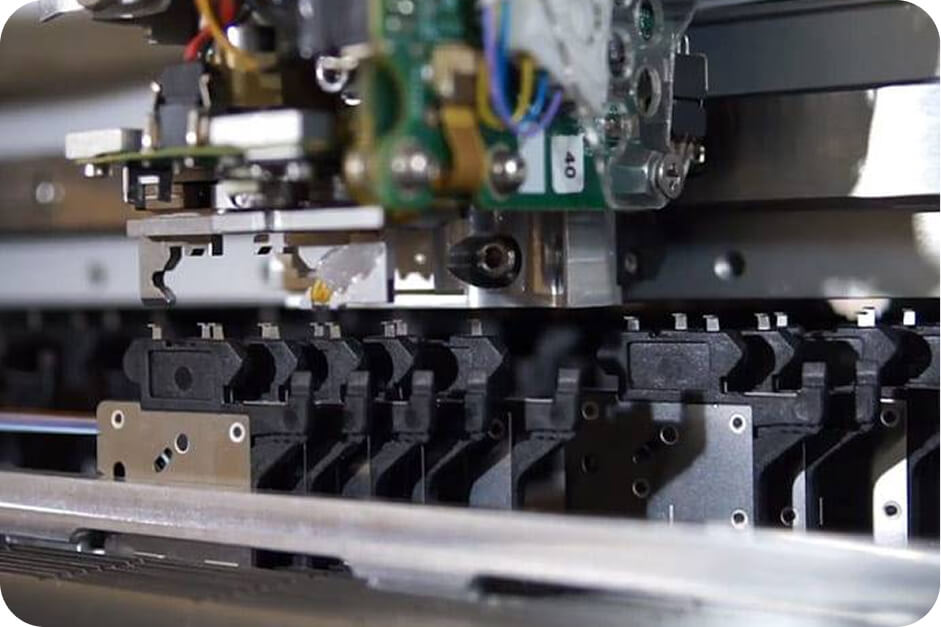
Our ROME robots are built to last based on their connections and disconnections. With a lifespan of 3 million cycles, they’re here to work tirelessly for decades.
Optimum Performance
Our robots ensure flawless optical fiber connections by moving precisely, using smart latching, applying just the right force, and sensing intelligently. You can count on top-quality connections every time!
Autonomous Operations
Our autonomous system can handle any situation without needing human help. ROME is tough enough for anything.
From earthquakes to power outages, ROME can sense and work through it all, keeping things running smoothly.
Technology with the Utmost Sophistication
1um Robotic Accuracy
Our servo control and encoder technology for the precision motion system inside ROME are performing in high fidelity.
Low Power Consumption
With power consumption of 50 to 150 Watts between standby and peak motion, ROME is energy efficient as a light bulb.
Matrix - It's Real!
Within a ROME, space is designed and structured into tens of thousands of individual spaces for connections.
Passive Latching Connection
A connection is mechanically latched in place without relying on electronics. Optical circuit will continue carrying services during power failures.
Optical Fidelity
Optical performance to meet or exceed the industry standards in a consistent basis is the ultimate goal ROME delivers.
Sensors and Sensing
Robotic autonomy depends on sensing of positions and outside environmental conditions. ROME has many built-in sensors.
ROME Mini Series
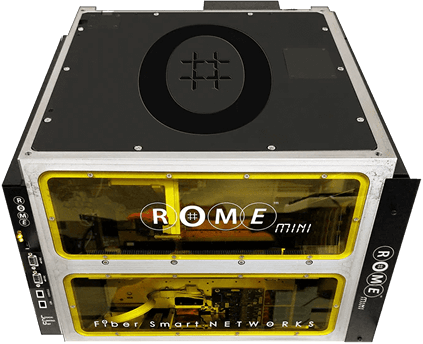
ROME Mini is a space-saving 7RU rack-mountable system, housing 200 fibers alongside a logical control unit (LCU) and patch panel interface.
ROME 500 Series
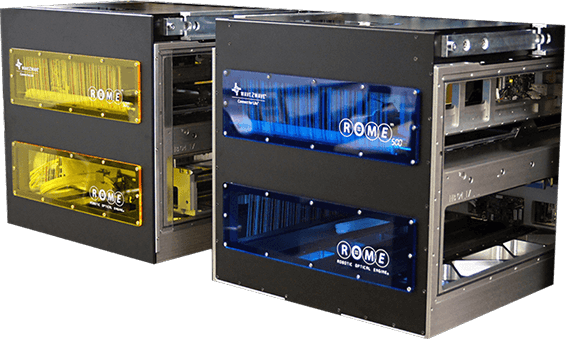
ROME 500 is a space-saving 10+1 RU rack-mountable system, equipped with 512 fibers and a modular logical control unit (LCU) and patch panel interface.
ROME Q Series
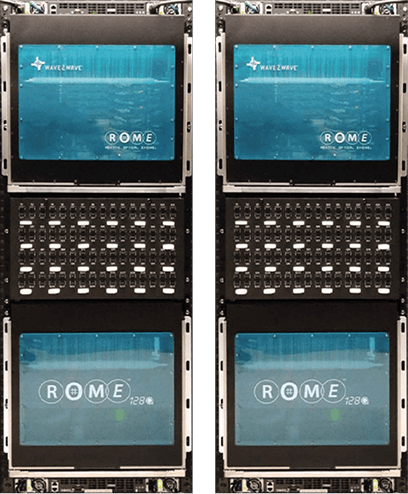
With ROME Q series, you have options: a single chassis for 64Q or double for 128Q. These systems support parallel optical connections using MPO interfaces for QSFP devices, making setup a breeze.
ROME MAX Series
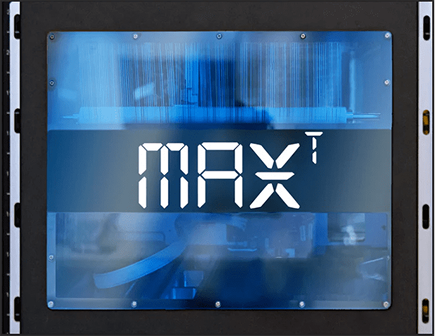
With ROME MAX series, you get full rack-size scalability, accommodating up to 2000 fibers in a single bay or thousands of fibers across multiple racks within the same setup.
Your Network's Smart Foundation
ROME is a super flexible robotic system that helps create dynamic fiber networks. These robots aren’t just for manual tasks—they’re powered by software to handle complex jobs.
At FiberSmart, we offer free design services to help you upgrade to the latest operations and applications. Let’s build smarter networks together!
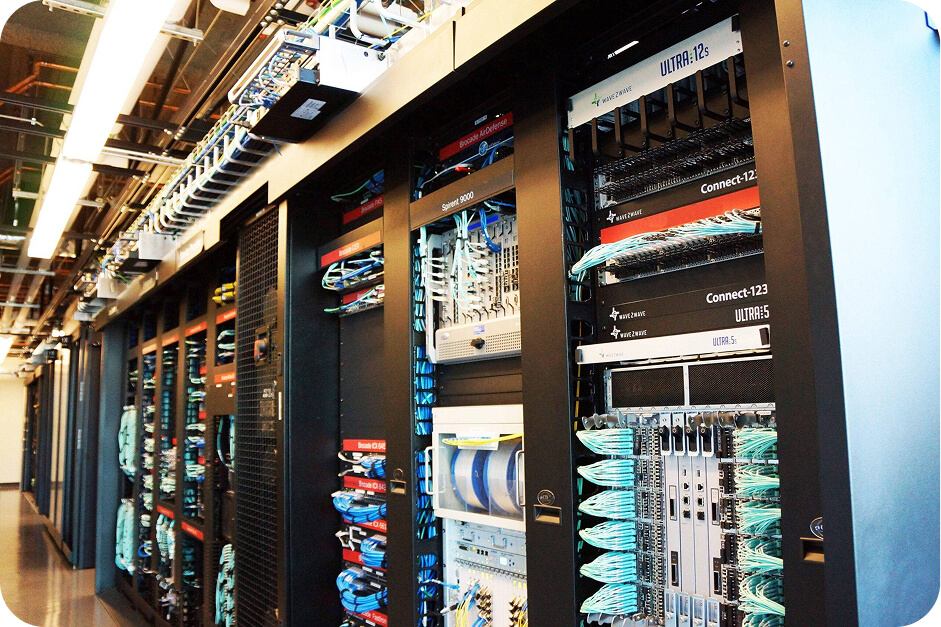
ROME is in Hyperscale Data Centers
Hyperscale data centers are massive and must be agile and support scaling up or down and dynamic changes in the hardware network connections. The Hyperscale network must be able to mix and match and reallocate on the fly. This type of a network must utilize modularity, automation and real-time analytics, especially as we enter the AI Era.
With FiberSmart’s comprehensive solution, the network is optimized, organized, automated and analyzed to enable real-time software-controlled connectivity. Agility at its finest.

ROME is in Military Applications
Mission critical applications in today’s military operations rely on a crucial communication infrastructure. And the network in the battlefield must be invulnerable to outages and have an instantaneous response time in all situations. Optical fiber is a fundamental component of the infrastructure that supports 24/7 uptime for our military forces, whose lives are often at risk and who may be put in danger if their supporting network is inadequate.
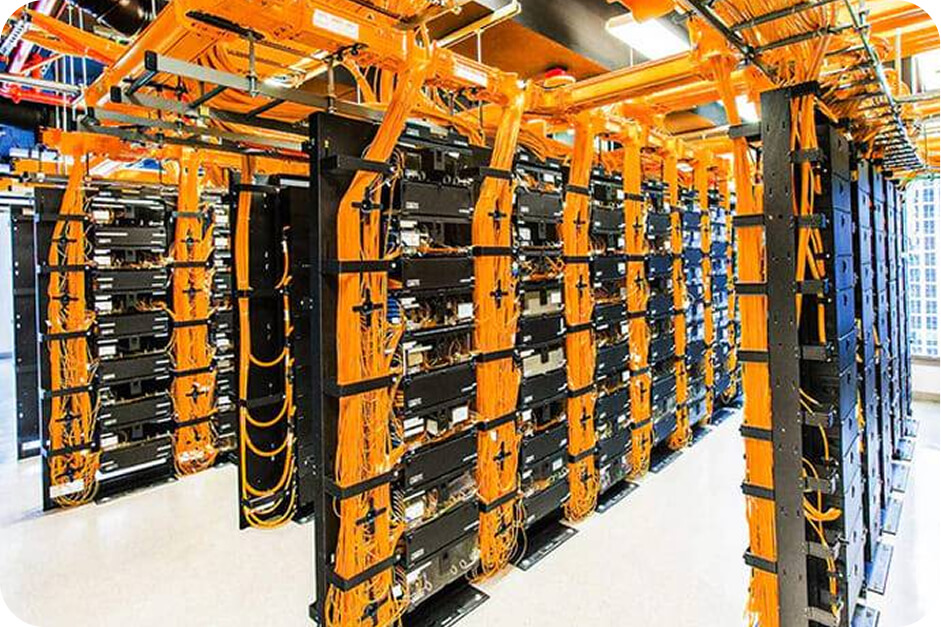
ROME is in Data Centers
Keeping data centers secure means minimizing human touch. Manual steps can leave openings for trouble. For data center owners, the Meet-Me-Room should be all about accurately connecting in real-time, not handling with costly onsite hands.
We’re locking down this vital operation, making it remote, safe and scalable.
ROME is in the Enterprise Cloud
Enterprise networks with a critical IT infrastructure require a zero-touch configuration, which can be accomplished through automation. Rome utilizes a robotic hand instead of an onsite smart hand, providing software-controlled connectivity of critical enterprise resources. It enhances visibility and security and enables admins to access their critical infrastructure from anywhere in the world.
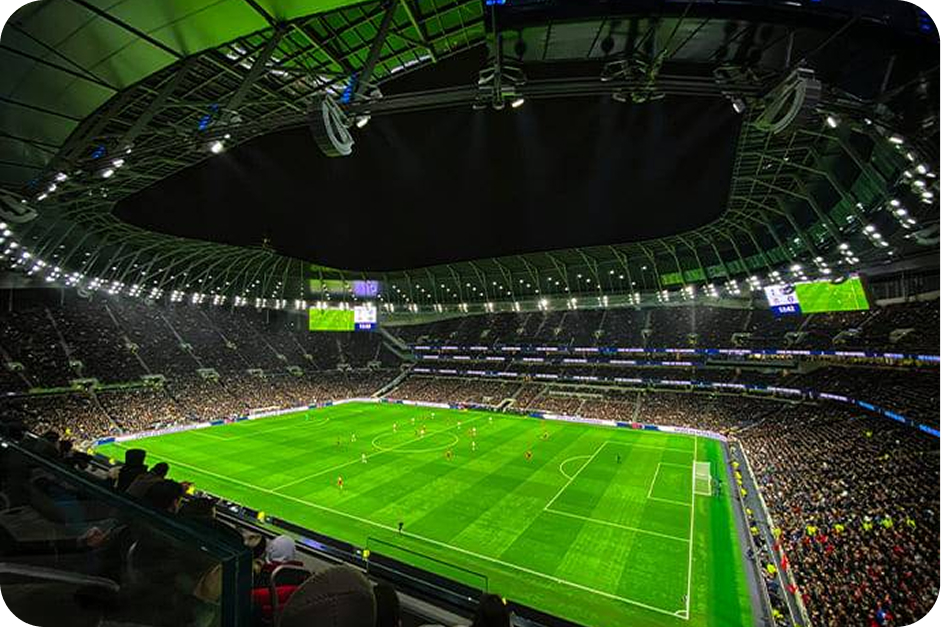
Sports and Entertainment Venues
Stadiums and Entertainment venues are normally equipped with state of the art broadcasting systems, high end video streaming and network intensive applications. Combine this with the ever evolving virtual gaming realm and virtual reality applications and it means there is a critical need to have a robust, automated and dynamic network supporting all of these. Rome brings robotic automation to each of these network infrastructures and is the way to meet the needs of our evolving AI era.
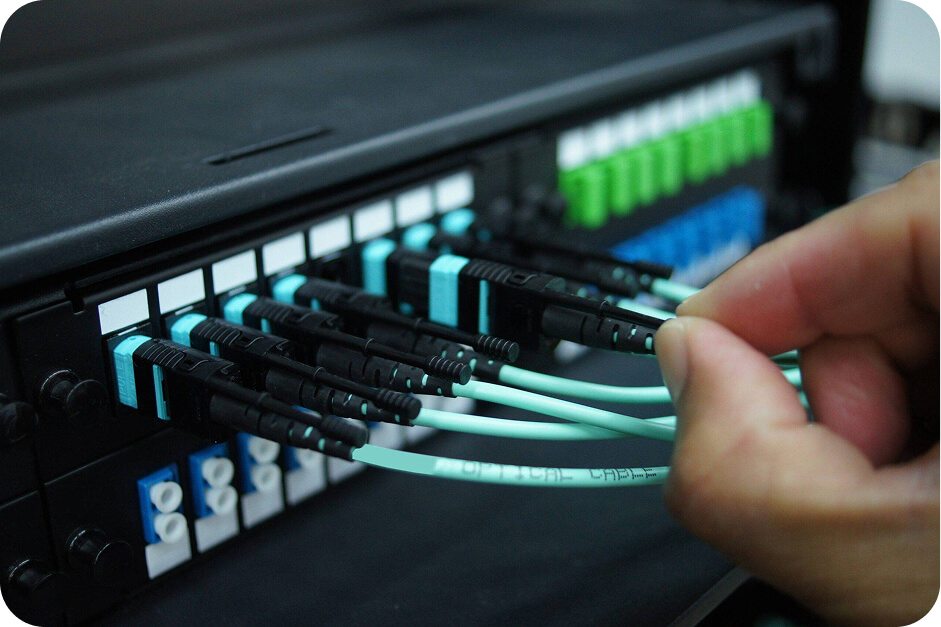
ROME is Connecting to the Edge
Enterprise networks with a critical IT infrastructure require a zero-touch configuration, which can be accomplished through automation. Rome utilizes a robotic hand instead of an onsite smart hand, providing software-controlled connectivity of critical enterprise resources. It enhances visibility and security and enables admins to access their critical infrastructure from anywhere in the world.
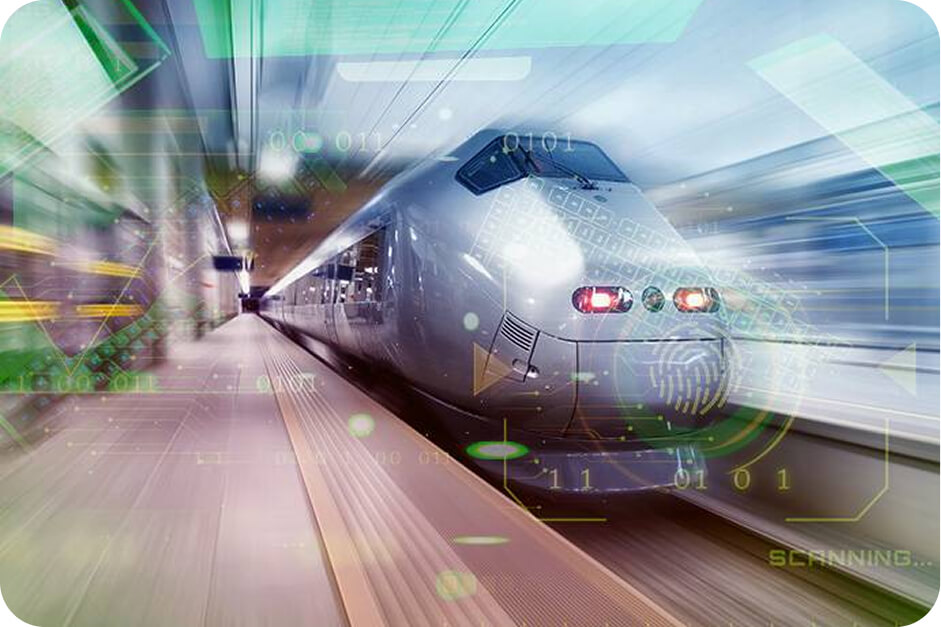
ROME is in the Train and Subway Systems
Stadiums and Entertainment venues are normally equipped with state of the art broadcasting systems, high end video streaming and network intensive applications. Combine this with the ever evolving virtual gaming realm and virtual reality applications and it means there is a critical need to have a robust, automated and dynamic network supporting all of these. Rome brings robotic automation to each of these network infrastructures and is the way to meet the needs of our evolving AI era.
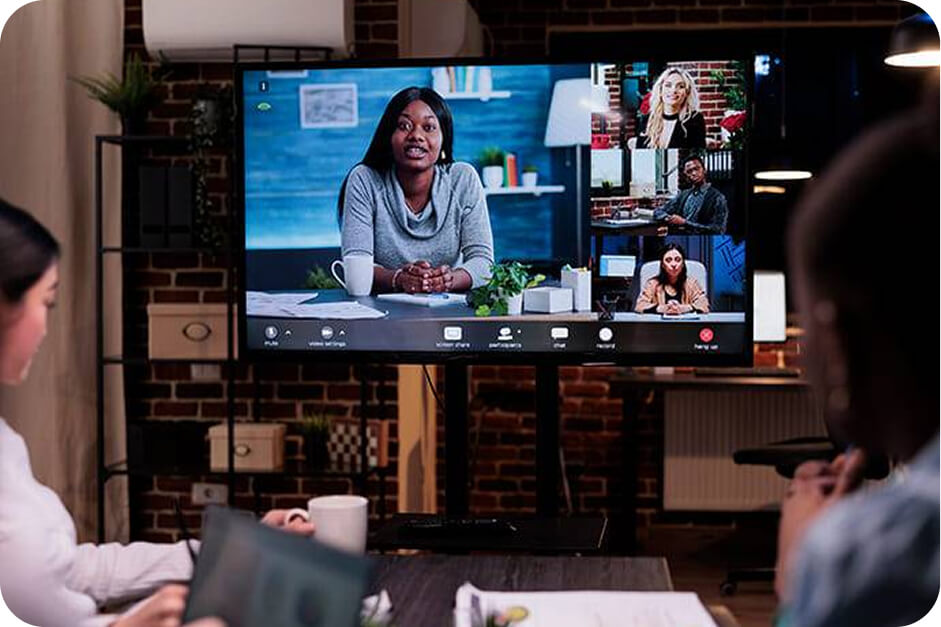
ROME is in Broadcasting
Super sharp videos like 4K, 8K, and more need lots of bandwidth. Getting videos out fast requires networks that react quickly.
FiberSmart makes networks smarter and easier to scale and provision.
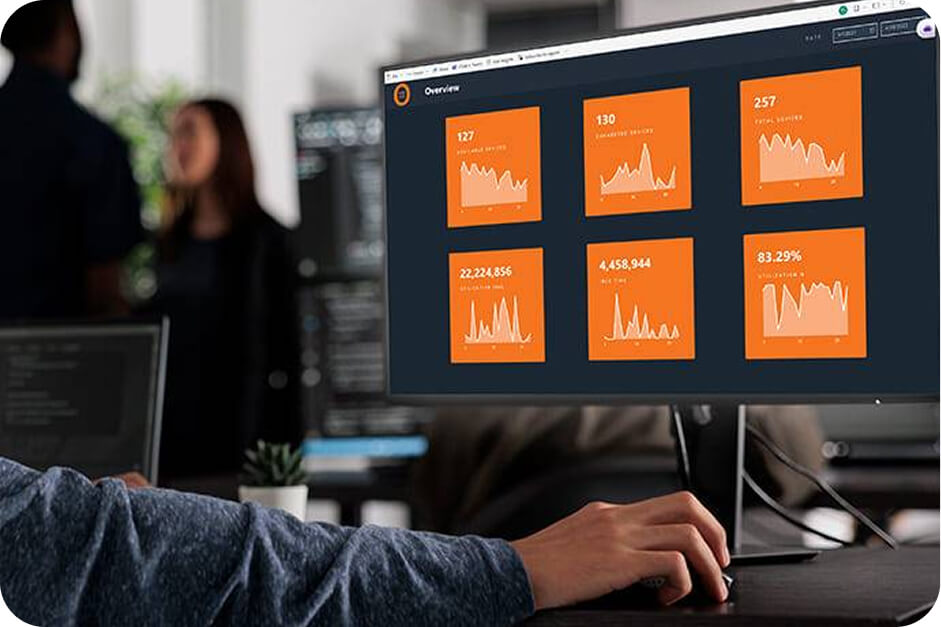
ROME is in Technology Testing Centers
Imagine a testing center that’s ready whenever you need it, wherever you are. With technology advancing fast, your testing grounds should keep pace and be available at the touch of a button.
And you should know what critical testing resources are available and be able to allocate or connect device ports as project needs require. All of this is possible with Rome.
Solving Tough Challenges Over Time
Others, including NTT, saw the need for fiber robotics. This is their early generation robotic platform, a true Rome predecessor.
The Unrelenting Data Center Battlefield—Why Robotics Like FiberSmart’s ROME Must Conquer the Toughest Tests
Data centers are the backbone of our digital world, powering everything from global commerce to AI breakthroughs and real-time communications. They don’t just operate—they endure. In this high-stakes arena, uptime is non-negotiable, and failure is catastrophic.
The Data Center: A Relentless Proving Ground
Data centers aren’t gentle labs; they’re battlegrounds. The conditions are merciless:
- Uptime Tyranny: Tier IV facilities demand 99.995% availability—downtime is measured in heartbeats, not hours. Robotics can’t just perform; they must be infallible.
- Physical Brutality: Packed racks, tangled cables, and thousands of ports cram robotics into a claustrophobic cage, running 24/7 with zero margin for error.
- Thermal and Power Chaos: Sweltering heat, sudden chills, and rare but devastating power cuts test endurance. Robotics must thrive on scraps of power without flinching.
- Nature’s Fury: Earthquakes don’t care about your SLA. In seismic hotspots—California, Japan, Taiwan—equipment that buckles under tremors is a liability.
This isn’t a forgiving sandbox; it’s a crucible where weakness gets exposed and crushed. For ROME to claim victory, it must prove itself tougher than the toughest challenges.
ROME: The Robotic Titan of Fiber Connectivity
FiberSmart’s ROME isn’t just a tool—it’s a revolution. This robotic juggernaut automates fiber optic switching with surgical precision, obliterating human error (the Achilles’ heel of network outages) and turbocharging provisioning speed. From the compact ROME Mini to the hyperscale ROME MAX, it handles thousands of connections in a single rack, dominating edge and core environments alike. But robotics in a data center isn’t a gimmick—it’s a war machine. ROME’s moving parts—robotic arms, latching systems, servo motors—face relentless scrutiny to deliver optical perfection under fire. Its secret? A brutal testing regimen that leaves no weakness unpunished, with earthquake resilience as its crowning triumph.
Reliability Testing: Forged in the Fire of Extremes
ROME doesn’t just meet standards—it redefines them. Its reliability testing is a merciless crucible designed to break anything less than invincible:
1. Mechanical Invincibility
- Cycle Torture: Millions of connection cycles—decades of punishment—prove ROME’s robotic guts won’t quit. It’s built to outlast the data center itself.
- Pinpoint Precision: Sub-millimeter accuracy isn’t a feature; it’s a mandate. Servo motors and encoders are drilled until they’re flawless, ensuring every fiber locks in perfectly.
2. Environmental Domination
- Thermal Hell: Sipping just 50–150 watts, ROME laughs at temperature swings that would fry lesser systems, thriving where others sweat or freeze.
- Power Apocalypse: When the grid fails, ROME’s mechanical latches hold fast—optical circuits stay live, no juice required. It’s passive toughness incarnate.
3. Seismic Supremacy
Earthquakes are the ultimate equalizer—ruthless, unpredictable, and unforgiving. ROME doesn’t just survive them; it conquers them:
- Shake-Table Armageddon: ROME endures simulated quakes that mimic the worst nature can throw—magnitude 7.0 and beyond. Its reinforced chassis and low-profile design shrug off the chaos.
- Smart Lockdown: Sensors detect tremors in real time, locking connections tighter than a vault. ROME doesn’t flinch—it adapts.
- Undefeated Recovery: Post-quake, ROME’s optical performance stands unscathed—no signal loss, no excuses. It’s ready to fight again while others limp to the repair bay.
In Tokyo or Silicon Valley, where a tremor can turn a data center into a disaster zone, ROME stands tall. Manual patching? A relic scrambling for relevance while ROME keeps the lights on.
4. Software Steel
ROME’s SDN integration isn’t just smart—it’s bulletproof. Cyberattacks, network floods, and software glitches get crushed under stress tests that mimic digital warfare. Remote control and real-time monitoring stay rock-solid, no matter the assault.
Earthquake Resilience: ROME’s Line in the Sand
Seismic events don’t negotiate. A magnitude 6.0 quake can turn a traditional data center into a graveyard of snapped fibers and frantic technicians. ROME rewrites that story. Its modular steel frame, anchored stability, and intelligent latching don’t just endure—they dominate. While legacy systems beg for hours of human triage, ROME keeps humming, delivering uninterrupted service. Base isolation and dampers protect buildings, but ROME protects itself—layering ironclad resilience atop facility defenses. In a seismic showdown, ROME isn’t a survivor; it’s the last one standing.
Challenges? Bring Them On
ROME doesn’t dodge the hard truths:
- Complexity: More moving parts mean more to master—but ROME’s maintenance is a science, not a gamble.
- Cost: Upfront price tags sting, but the ROI buries manual labor and downtime losses in the dust.
- Skeptics: Old-school operators cling to their patch cords. ROME’s proven dominance silences doubters—one flawless deployment at a time.
Conclusion
The data center isn’t a playground—it’s a proving ground where only the strongest survive. FiberSmart’s ROME doesn’t just meet the challenge; it crushes it. From relentless uptime to seismic supremacy, its brutal testing forges a robotic titan that laughs at earthquakes and outpaces human frailty. As AI, edge computing, and hyperscale demands push data centers to the brink, ROME isn’t just ready—it’s unstoppable. The future isn’t coming; it’s here, and ROME is its unrelenting champion.
FiberSmart and NTT – Pioneering Robotic Automation in the Telecom Industry
The telecommunications industry stands at the cusp of a transformative era, driven by the exponential growth of data, the rollout of 5G networks, and the increasing demand for edge computing. As networks become more complex and dynamic, traditional manual processes for managing infrastructure—particularly optical fiber connections—are no longer sustainable. Automation, powered by robotics, has emerged as a critical solution to enhance efficiency, reduce costs, and ensure reliability.
FiberSmart, a global leader in fiber optic automation and virtualization, has partnered with NTT, Japan’s premier telecommunications provider and a trailblazer in robotic automation, to redefine the future of telecom infrastructure. This white paper explores NTT’s early efforts in robotics-driven automation, the evolution of these initiatives, and how FiberSmart’s cutting-edge technology amplifies this legacy to meet the demands of the AI-driven era.
NTT’s Early Efforts in Robotic Automation
NTT has long been a visionary in the telecom sector, recognized not only for its expansive network infrastructure but also for its innovative approach to operational challenges. As early as the 2010s, NTT began exploring automation to address the inefficiencies of manual processes in data centers and network management. With Japan facing an aging workforce and a shrinking labor pool, NTT identified robotics as a strategic solution to maintain service quality and operational agility.
One of NTT’s pioneering initiatives was the “Robotizing Data Centers” project, launched in collaboration with multiple technology partners. This effort aimed to train industrial robots to perform central tasks in data centers autonomously, such as cable management, equipment maintenance, and physical layer connectivity. By automating these labor-intensive processes, NTT sought to reduce operational costs—particularly significant in its vast, power-hungry data centers—and improve uptime by minimizing human error, which accounts for a substantial portion of network downtime.
NTT’s early robotic platforms, predecessors to modern systems like FiberSmart’s ROME (Robotic Optical Mechanical Electrical) solution, demonstrated the potential of software-directed automation at the physical layer. These efforts laid the groundwork for a shift from reactive maintenance to proactive, predictive network management. While these initial systems were limited in scale and sophistication, they showcased NTT’s commitment to integrating robotics into telecom operations, setting a precedent for the industry.
The Evolution of Automation in Telecom
The telecom landscape has evolved dramatically since NTT’s early experiments. The advent of hyperscale data centers, the proliferation of IoT devices, and the transition to 5G have intensified the need for agile, scalable networks. Manual patching and maintenance of optical fiber connections, once a manageable task, now pose significant bottlenecks. Downtime, security risks, and escalating operational expenditures (OPEX) threaten service providers’ ability to meet consumer expectations for speed, reliability, and real-time data.
Automation has thus become a strategic imperative. Beyond software-based solutions like SDN (Software-Defined Networking) and NFV (Network Functions Virtualization), the physical layer—where cables and connections reside—requires equal innovation. Robotics offers a bridge between the digital and physical realms, enabling precise, repeatable tasks without human intervention. NTT’s foresight in this domain positioned it as a leader, but the complexity of modern networks demands a next-generation approach.
FiberSmart and NTT: A Synergistic Partnership
FiberSmart’s partnership with NTT builds on this foundation, combining NTT’s operational expertise and global reach with FiberSmart’s state-of-the-art robotic fiber-switching technology. At the heart of this collaboration is FiberSmart’s ROME platform—a revolutionary system that automates optical fiber connections with unparalleled precision and efficiency.
The ROME Platform: Redefining Network Automation
ROME represents a leap forward from NTT’s early robotic prototypes. This agnostic, software-driven platform integrates robots, sensors, and a user-friendly interface to manage physical layer connectivity dynamically. Unlike manual patching, which is slow and error-prone, ROME executes connections remotely via a drag-and-drop GUI, visualizing and updating the network configuration in real time. With a lifespan of 3 million cycles, ROME is engineered for decades of reliable service, supporting both single-mode and multi-mode fibers across various network scales—from edge data centers to hyperscale facilities.
Key benefits of ROME include:
- Elimination of Human Error: By removing manual intervention, ROME reduces the risk of service disruptions, which industry studies attribute to human error in 70% of network downtime cases.
- Cost Efficiency: Onsite robotic automation eliminates travel, labor, and equipment shipping costs, particularly critical as networks extend to remote edge locations.
- Scalability and Resilience: ROME adapts to dynamic demands, reconfiguring connections to support 400G, 5G, and edge computing without tying up staff for months.
NTT’s Role in the Partnership
NTT brings to the table its extensive experience in deploying automation at scale, as well as its global data center footprint—one of the largest in the world. NTT’s early adoption of robotics provides valuable insights into real-world implementation, refining FiberSmart’s technology for diverse operational environments. Additionally, NTT’s leadership in initiatives like the ETSI Zero-Touch Network and Service Management group complements FiberSmart’s mission to create fully autonomous networks.
Together, FiberSmart and NTT are testing and deploying ROME across select NTT facilities, with plans to expand to other regions. This collaboration not only enhances NTT’s operational efficiency but also positions it as a showcase for FiberSmart’s technology, demonstrating its impact to the broader telecom industry.
Impact and Future Implications
The FiberSmart-NTT partnership marks a pivotal moment in telecom automation. By marrying NTT’s legacy of innovation with FiberSmart’s advanced robotics, the collaboration addresses critical industry challenges:
- Service Agility: Faster, more reliable connections enable telecom providers to roll out new services and respond to customer needs in real time.
- Operational Efficiency: Automation reduces OPEX, freeing resources for innovation and strategic growth.
- Sustainability: Fewer truck rolls and optimized resource use align with global sustainability goals.
Looking ahead, this partnership paves the way for fully autonomous data centers, where robotics and AI converge to predict and resolve issues before they occur. As the industry embraces the AI era, FiberSmart and NTT are setting a new standard for network reliability and performance.
Conclusion
FiberSmart’s partnership with NTT is more than a collaboration—it’s a testament to the power of innovation rooted in shared vision. NTT’s early efforts in robotic automation provided the spark, and FiberSmart’s ROME platform has ignited a revolution. Together, they are transforming the telecom industry, proving that the future of connectivity lies in the seamless integration of robotics, software, and human ingenuity.
From Switchboard Operators to Robotics: The Evolution of Telecommunications and the Rise of FiberSmart’s ROME
The telecommunications industry has undergone a profound transformation since its inception in the late 19th century. From the manual labor of switchboard operators—who connected calls with precision and courtesy—to the automation of telephone exchanges and the advent of robotics, this evolution reflects humanity’s relentless pursuit of efficiency, connectivity, and innovation. Today, robotics stands at the forefront of this legacy, exemplified by FiberSmart’s ROME, a modular robotic platform poised to redefine operational capabilities in diverse fields.
Introduction
The telephone, patented by Alexander Graham Bell in 1876, revolutionized communication by bridging vast distances. However, its early iterations relied heavily on human intermediaries: switchboard operators. These individuals, predominantly women by the late 19th century, were the unsung heroes of early telecommunications, manually connecting callers through a tangle of cords and jacks. Fast forward to the 21st century, and the landscape has shifted dramatically. Automation, artificial intelligence, and robotics have replaced human operators, enabling seamless global connectivity. Among these advancements, FiberSmart’s ROME emerges as a cutting-edge robotic system, symbolizing the convergence of historical lessons and futuristic ambition. This paper examines this journey, from the “nice switchboard ladies” to the robotic era led by innovations like FiberSmart’s ROME.
The Era of Switchboard Operators
The Birth of a Profession
In the late 1870s, the telephone’s potential became evident, but its functionality was limited. Early telephones were rented in pairs, connecting only two parties. The introduction of central exchanges changed this, and with it came the switchboard—a device that allowed operators to route calls by plugging and unplugging cords into a grid of jacks. The first such exchange, established by George W. Coy in New Haven, Connecticut, in 1878, marked the birth of a new profession.
Initially, young boys were hired as operators, drawing from their success as telegraph messengers. However, their impatience and penchant for mischief quickly proved incompatible with the demands of live telephony. In response, companies like the Boston Telephone Dispatch turned to women, hiring Emma Nutt as the first female operator on September 1, 1878. Nutt’s hiring set a precedent: women soon dominated the field, valued for their courtesy, diligence, and soothing voices.
The Golden Age
By the early 20th century, switchboard operators were indispensable. In 1910, the United States employed 88,000 female operators, and by 1950, that number peaked at 342,000 within the Bell Telephone System alone, with another million working in private settings like offices and hotels. These operators were more than technical facilitators; they were community figures, often known by name in small towns, and vital cogs in emergencies, connecting doctors, police, and families.
Their work, however, was not without challenges. Operators faced strict dress codes, long hours, and constant monitoring. In large cities, switchboards towered floor-to-ceiling, requiring operators to climb ladders or, in some cases, don roller skates to keep pace with demand. Despite these conditions, their role empowered women in the workforce, paving the way for labor rights movements and even influencing suffrage debates during World War I, when operators facilitated wartime communications.
The Decline of Human Operators
Automation Takes Hold
The seeds of the operators’ decline were sown in 1888, when Almon Strowger invented the automatic telephone exchange. Frustrated by operators redirecting calls to competitors, Strowger’s system allowed users to dial directly, bypassing human intervention. The first automatic exchange debuted in 1891 in La Porte, Indiana, and while adoption was slow, it marked the beginning of the end for manual switchboards.
By the mid-20th century, electromechanical switching systems proliferated, followed by electronic exchanges in the 1960s. Dial phones, introduced in the 1930s, became standard, and direct-dial long-distance calling emerged in the 1950s. These innovations slashed the need for operators. By 1984, telecommunications operator employment had plummeted to 40,000, and today, fewer than 2,000 remain in the U.S., relegated to niche roles.
Lessons from the Transition
The shift from human operators to automation offers a cautionary tale about technological displacement. While efficiency soared, the personal touch of operators—their ability to troubleshoot, comfort, and connect—faded. This tension between progress and human value persists as robotics and AI reshape modern industries.
The Rise of Robotics in Telecommunications and Beyond
Robotics: The Next Frontier
As telecommunications matured, robotics emerged as a natural extension of automation. Robots now monitor network traffic, repair infrastructure, and enhance customer service through AI-driven interfaces. In broader contexts, robotics tackles tasks too dangerous, repetitive, or precise for humans, from manufacturing to space exploration.
The integration of robotics into telecommunications reflects a broader trend: machines augmenting human capability. Unlike the automatic exchanges that outright replaced operators, today’s robots often collaborate with humans, blending autonomy with oversight. This hybrid approach preserves the adaptability operators once provided while leveraging technology’s scalability.
FiberSmart’s ROME: A Modular Marvel
At the vanguard of this robotic revolution stands FiberSmart’s ROME. Specifically designed to enhance telecommunications and data center operations, FiberSmart’s ROME is a modular, adaptable robotic system that automates critical fiber optic connectivity. As a scalable platform, ROME combines mobility, precision, and versatility, making it suitable for applications ranging from network infrastructure maintenance to advanced data center automation.
FiberSmart’s ROME features a modular design that allows it to be reconfigured for specific tasks, much like how switchboard operators once adapted to varying call demands. Its operational framework integrates advanced sensors, AI, and mechanical dexterity, enabling it to perform complex functions autonomously or under human guidance. In telecommunications, ROME automates physical layer connections, replacing manual patching with software-directed precision. In essence, FiberSmart’s ROME is a spiritual successor to the operators’ legacy: a bridge between human intent and technological execution.
Implications and Future Directions
Bridging Past and Future
The journey from switchboard operators to FiberSmart’s ROME underscores a recurring theme: technology evolves, but its success hinges on serving human needs. Operators thrived because they provided connection and reassurance; robotics, led by systems like FiberSmart’s ROME, must do the same. As industries adopt modular robotic platforms, they should prioritize flexibility, user-friendliness, and collaboration—qualities that echo the operators’ strengths.
Opportunities with FiberSmart’s ROME
FiberSmart’s ROME offers vast potential. In telecommunications, it automates infrastructure maintenance in hazardous or remote environments, reducing risks to workers and operational costs. Beyond that, its adaptability suits it for logistics, healthcare, and even extraterrestrial missions, where modular systems can evolve with changing demands. As robotics advances, FiberSmart’s ROME could lead a wave of customizable, multi-purpose machines, redefining operational efficiency across sectors.
Challenges Ahead
Yet challenges remain. Robotics must navigate ethical questions—job displacement, privacy, and autonomy—that echo the operators’ era. Ensuring that systems like FiberSmart’s ROME enhance, rather than erode, human agency will be critical. Moreover, technical hurdles, such as refining AI accuracy and managing costs, must be addressed to realize ROME’s full promise.
Conclusion
From the switchboard operators who connected the world with cords and courtesy to FiberSmart’s ROME, a robotic system that promises a modular future, the story of telecommunications is one of adaptation and ambition. The “nice switchboard ladies” laid the groundwork for a connected society, and their legacy lives on in the machines that now carry the torch. As we embrace robotics, we must honor this history by building systems like FiberSmart’s ROME that not only innovate but also uplift, ensuring that progress remains a human endeavor at its core.